A long kiss goodnight
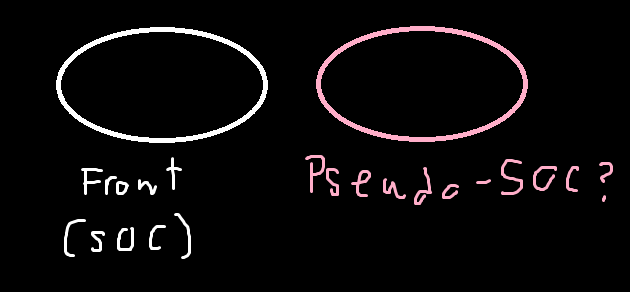
It also doesn't help that I'm completely speculating what a possible "pseudo-SOC" even is. I think it could be a possible explanation for why some systems have "inner worlds" and persistent realms, they somehow have another SOC they can go to. If the host is switched-in, it would explain why the host would have a lot of difficulty accessing this other space and the inherent lack of control (we strongly assume that if you are switched-in, you have the most control). I also wonder if it's possible some tulpas actually have their own SOCs in addition to their own channels, and that would create a very different experience with switching than say what we do where Gray and I switch in and out of the same front.
There's also the fear of wanting to actually turn off any pseudo-SOC we end up creating. If we can create a SOC, why not turn it off? We don't know what the consequences for having something like it are, like if it kills our ability to focus. The new problem is we don't want to learn how to "turn off" our front, but the idea of doing that sounds pretty ridiculous. You can't just uh... black out for no reason, it doesn't make any sense
That's where we are for now. (edited)
Your cautiousness is well placed in my opinion.
Your thoughts above are specifically the type of discussion I am seeking by participating here.
I think it's pretty clear the front SOC can be switched off as in some DID.
My mother was a disassiative alcoholic, whose personality was radically different with the first drink, even before getting drunk.
Many alcoholics experience black out (of the sober SOC) while the inebriated functions in the world often not even appearing to others as drunk, and not just for short times. Some go at least days or weeks, 'wake up' in another city having travelled long distances.
The point is not to employ drugs or create a disorder but this provides strong evidence that human minds have these capabilities, and more, even though we don't consciously use them or discuss them.
Also obviously, the vast majority of people don't actively create tulpas.

 1
1


 1
1
 1
1